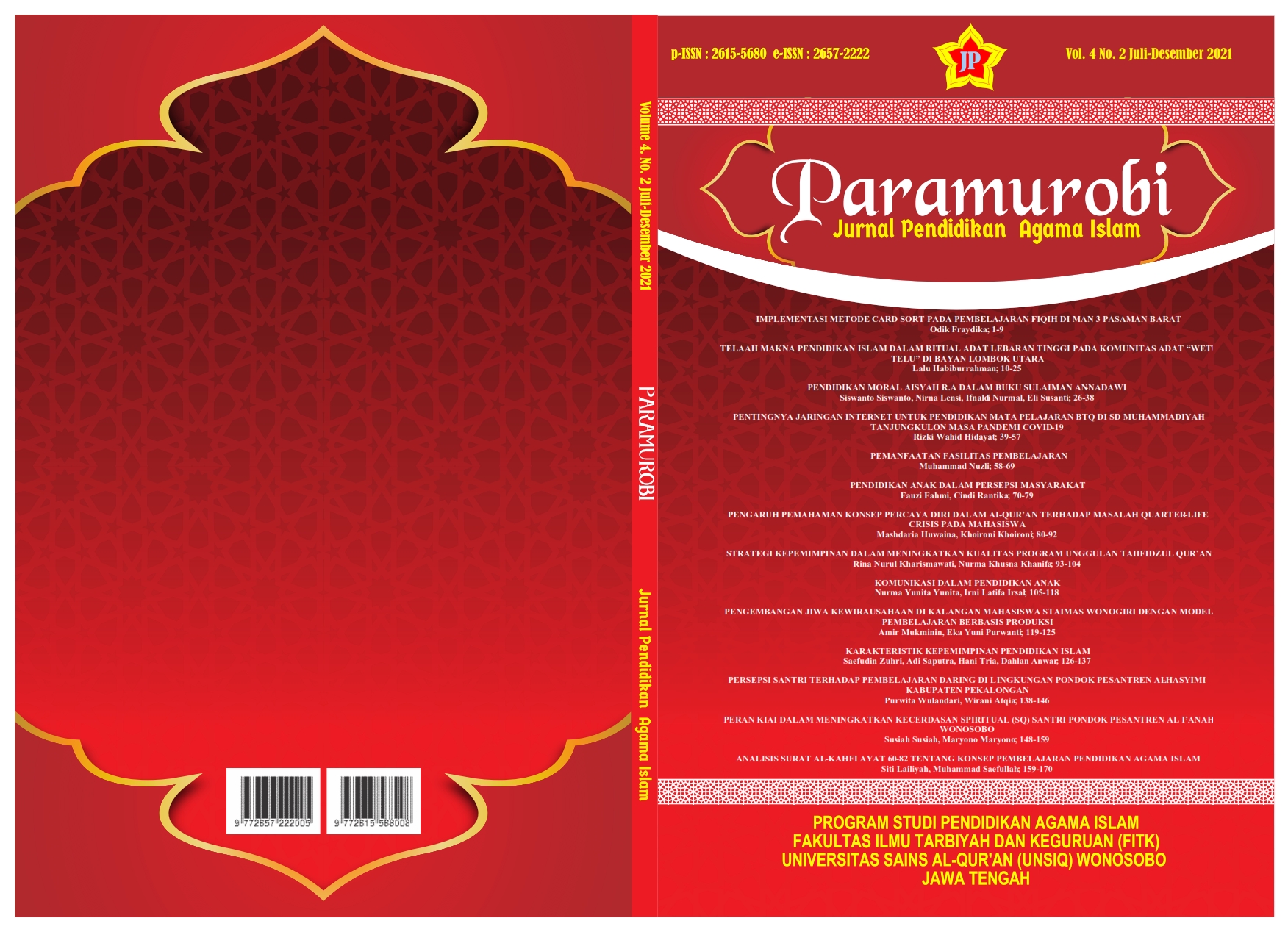
PENGEMBANGAN JIWA KEWIRAUSAHAAN DI KALANGAN MAHASISWA STAIMAS WONOGIRI DENGAN MODEL PEMBELAJARAN BERBASIS PRODUKSI
DOI:
https://doi.org/10.32699/paramurobi.v4i2.2104Keywords:
motivation, entrepreneurial spirit, studentsAbstract
The development of the entrepreneurial spirit has become crucial in today's era. Entrepreneurship has become an important authority in society through entrepreneurship will help to open up job opportunities for the community, especially for the development of human resources. This article will discuss the role of STAIMAS Wonogiri to foster motivation and entrepreneurial spirit among students with a production-based learning model. Students have a strategic position to develop entrepreneurial attitudes through entrepreneurship education programs, especially in entrepreneurship practices and job training such as seeking business opportunities through lecturer activities and using industrial cooperation agreements.
References
Adnyana I Gusti Lanang Agung & Purnami Ni Made. 2016. Pengaruh Pendidikan Kewirausahaan, self efficacy dan locus of control pada Niat Berwirausaha, E- Jurnal Manajemen Unud, Vol. 5, No. 2: 1160-1188.
Chimucheka, Tendai. 2013. The Impact of Entrepreneurship Education on the Establishment and Survival of Small, Micro and Medium Enterprises (SMMEs).Journal Economics, Vol. 4, No. 2 : 157-168.
Collins, C.J., Hanges, P.J., & Locke, E.A.2004. The relationship of achievement motivation to entrepreneurial behavior: A meta-analysis. Human Performance, Vol. 17, No.1: 95-117.
Fatoki, Olawale. 2014. The Entrepreneurial Intention of Undergraduate Students in South Africa: The Influences of Entrepreneurship Education and Previous Work Experience. Mediterranean Journal of Social Sciences, Vol. 5, No.7: 294-299.
Ganefri. 2013.The Development Of Production-Based Learning Approach To Entrepreneurial Spirit For Engineering Students. Asian Social Science; Vol. 9, No. 12; 1911-2017.
Meyer, D.J. Harvey J.W. 2004. Veterinary Laboratory Medicine Interpretation and Diagnosis. Philadelphia: Saunders.
Purwana, D., Suhud, U., & Arafat, M.Y. 2015. Taking/receiving and giving (TRG): A comparison of two quantitative pilot studies on students’ entrepreneurial motivation in Indonesia. International Journal of Research Studies in Management, Vol. 4, No.1: 3-14.
Segal, G., Borgia, D., & Schoenfeld, J. 2005. The motivation to become an entrepreneur. International Journal of Entrepreneurial Behavior & Research, Vol. 11, No.1: 42-57.
Chimucheka, Tendai. 2013. The Impact of Entrepreneurship Education on the Establishment and Survival of Small, Micro and Medium Enterprises (SMMEs).Journal Economics, Vol. 4, No. 2 : 157-168.
Collins, C.J., Hanges, P.J., & Locke, E.A.2004. The relationship of achievement motivation to entrepreneurial behavior: A meta-analysis. Human Performance, Vol. 17, No.1: 95-117.
Fatoki, Olawale. 2014. The Entrepreneurial Intention of Undergraduate Students in South Africa: The Influences of Entrepreneurship Education and Previous Work Experience. Mediterranean Journal of Social Sciences, Vol. 5, No.7: 294-299.
Ganefri. 2013.The Development Of Production-Based Learning Approach To Entrepreneurial Spirit For Engineering Students. Asian Social Science; Vol. 9, No. 12; 1911-2017.
Meyer, D.J. Harvey J.W. 2004. Veterinary Laboratory Medicine Interpretation and Diagnosis. Philadelphia: Saunders.
Purwana, D., Suhud, U., & Arafat, M.Y. 2015. Taking/receiving and giving (TRG): A comparison of two quantitative pilot studies on students’ entrepreneurial motivation in Indonesia. International Journal of Research Studies in Management, Vol. 4, No.1: 3-14.
Segal, G., Borgia, D., & Schoenfeld, J. 2005. The motivation to become an entrepreneur. International Journal of Entrepreneurial Behavior & Research, Vol. 11, No.1: 42-57.
Downloads
Published
2021-12-27
Issue
Section
Volume 4
License
Authors who publish with this journal retain copyright and full publishing rights without restrictions, and grant the journal the right of first publication. Articles are licensed under the Creative Commons Attribution 4.0 International License (CC BY 4.0), which allows others to share and adapt the work with an acknowledgement of authorship and of the initial publication in this journal. Authors may enter into separate, additional arrangements for the non-exclusive distribution of the published version (for example, posting it to an institutional repository or publishing it in a book), with an acknowledgement of its initial publication in this journal.How to Cite
“PENGEMBANGAN JIWA KEWIRAUSAHAAN DI KALANGAN MAHASISWA STAIMAS WONOGIRI DENGAN MODEL PEMBELAJARAN BERBASIS PRODUKSI”. 2021. PARAMUROBI: JURNAL PENDIDIKAN AGAMA ISLAM 4 (2): 119-25. https://doi.org/10.32699/paramurobi.v4i2.2104.